Submission Searcher
Recommended
SYSTEMATICALLY ATTACKING FROM OPEN GUARD SEATED POSITION
From GORDON RYAN
- No-Gi
- Intermediate
- Systems

[category_total_hours]
Progress in Positional Grappling: 0%
Sign up free to track your progress!
Video Techniques
Single Leg X to X-Guard Transition Technique Videos
Welcome to our Single Leg X to X-Guard Transition Technique video category! Here, you will find a comprehensive collection of instructional videos that will help you master this essential Brazilian Jiu-Jitsu (BJJ) technique. Whether you are a beginner looking to expand your knowledge or an experienced practitioner aiming to refine your skills, these videos will guide you through the intricacies of executing a seamless transition from Single Leg X to X-Guard. With detailed step-by-step instructions and visual demonstrations, these videos are designed to enhance your understanding and proficiency in this game-changing technique. Get ready to take your BJJ game to new heights as you explore the various videos in this category and unlock the secrets of the Single Leg X to X-Guard Transition.
Curated instructionals for this category
Some links may be affiliate links. We may earn a commission if you purchase through them, at no extra cost to you.
Compare curated courses for this category
From GORDON RYAN
Learn a modern no-gi passing approach built around close passing positions such as split squat, half butterfly, knee shield and…
From JOHN DANAHER
Learn a systematic survival and escape framework from common pins and bad positions so you can stay alive long enough…
Some links may be affiliate links. We may earn a commission if you purchase through them, at no extra cost to you.
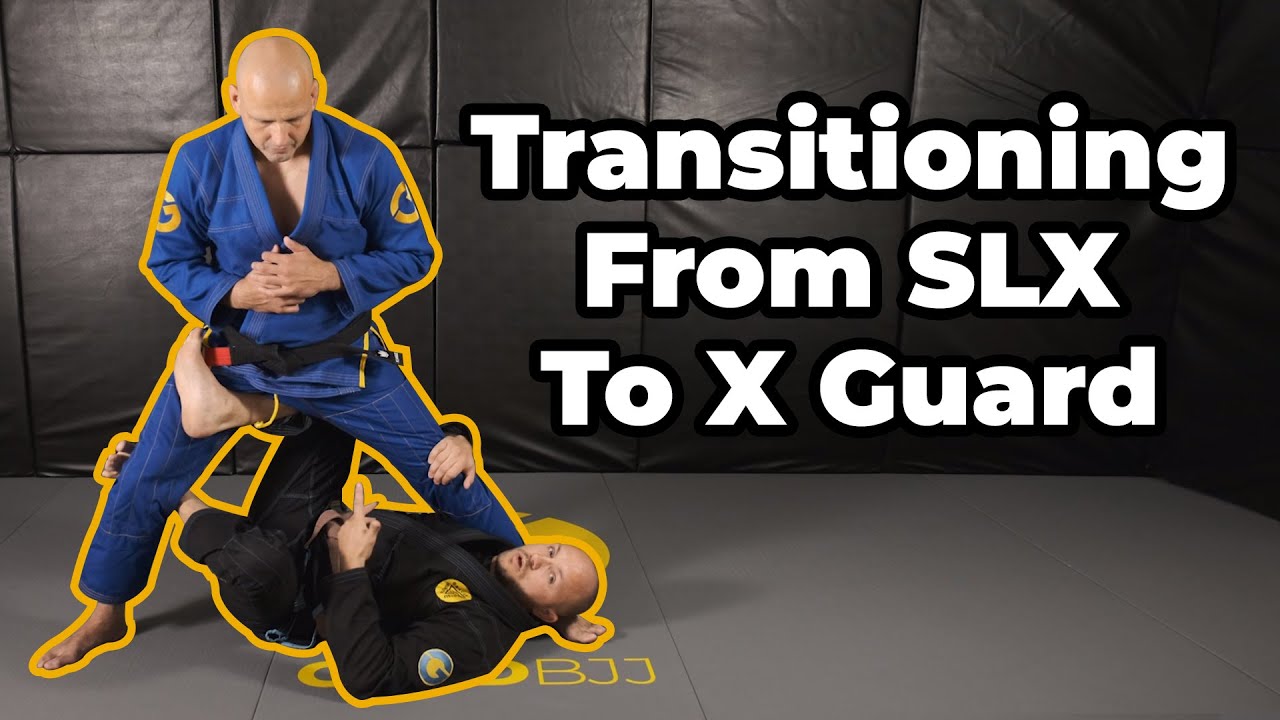
In the realm of Brazilian Jiu-Jitsu, the Single Leg X to X-Guard Transition technique is a fundamental move that every practitioner should have in their arsenal. This technique allows a practitioner to seamlessly transition from a dominant position known as Single Leg X-Guard to X-Guard, enabling them to maintain control over their opponent while setting up various sweeps and submissions. To further enhance the learning experience, numerous videos have been curated to cater to all levels of proficiency. These videos serve as invaluable resources, providing detailed step-by-step demonstrations, insightful breakdowns, and expert tips to help practitioners refine their execution of this technique.
For beginners, it is crucial to grasp the basic mechanics of the Single Leg X to X-Guard Transition technique. Videos specifically designed for novices offer simplified explanations, emphasizing the importance of proper body positioning and weight distribution during the transition. These videos break down the move into smaller components, allowing beginners to understand the mechanics behind each step. By repeatedly watching and practicing along with these videos, beginners can gradually build the necessary muscle memory and confidence to execute the technique effectively.
Intermediate practitioners can benefit from videos that delve deeper into the intricacies of the Single Leg X to X-Guard Transition technique. These videos highlight variations and nuances that can be employed to surprise opponents and maintain an element of surprise. Furthermore, they emphasize the importance of timing and leverage to optimize the effectiveness of this technique. By meticulously observing these videos, intermediate practitioners can refine their timing, footwork, and grips, enabling them to seamlessly transition between positions and catch opponents off guard.
Advanced practitioners continually seek to expand their knowledge and understanding of Brazilian Jiu-Jitsu techniques. For them, videos that offer in-depth analysis and insights from renowned black belts and world champions are invaluable. These videos delve into the finer details of the Single Leg X to X-Guard Transition technique, exploring alternative entries, counters, and combinations that can be seamlessly integrated into a practitioner's game. By studying these advanced videos, practitioners can elevate their understanding of the technique, enabling them to adapt it to their unique style and strategy.
In conclusion, the Single Leg X to X-Guard Transition technique is a vital tool in a Brazilian Jiu-Jitsu practitioner's arsenal. By utilizing the wealth of videos available, practitioners of all levels can enhance their understanding and execution of this technique. Whether you are a beginner seeking to establish a strong foundation, an intermediate practitioner looking to refine your skills, or an advanced competitor aiming to add versatility to your game, the curated videos provide a comprehensive resource to develop your proficiency in the Single Leg X to X-Guard Transition technique.
1. What is the Single Leg X to X-Guard Transition technique in BJJ?
The Single Leg X to X-Guard Transition technique is a fundamental move in Brazilian Jiu-Jitsu where the practitioner transitions from the Single Leg X guard position to the X-Guard position. This transition allows for better control over the opponent's leg and opens up opportunities for sweeps, submissions, or transitioning to other positions.
2. How can I improve my Single Leg X to X-Guard Transition technique?
To improve your Single Leg X to X-Guard Transition technique, it is crucial to practice proper body positioning and timing. Focus on maintaining a strong grip on your opponent's leg while using your hips and core to create leverage. Additionally, drilling the transition with a training partner and seeking guidance from an experienced instructor can greatly enhance your execution of this technique.
3. Are there any common mistakes to avoid when performing the Single Leg X to X-Guard Transition technique?
Yes, there are some common mistakes to avoid when performing the Single Leg X to X-Guard Transition technique. One common error is relying solely on upper body strength instead of utilizing proper hip movement and leverage. It is also important to avoid keeping your legs too loose, as this can result in losing control of your opponent's leg. Lastly, be cautious of telegraphing your intentions by not disguising your transition, as this can give your opponent an opportunity to counter or defend against your move.

A team of BJJ enthusiasts, curating videos for the benefits of others.