Submission Searcher
Recommended
THE FRONT HEADLOCK SYSTEM
From JOHN DANAHER
- Both
- Intermediate
- Systems

[category_total_hours]
Progress in Chokes & Strangles: 0%
Sign up free to track your progress!
Video Techniques
Reverse Crucifix Technique Videos
Welcome to our Reverse Crucifix technique category! In this section, we have curated a collection of high-quality videos that demonstrate and explain the intricacies of the Reverse Crucifix technique in Brazilian Jiu-Jitsu (BJJ). Whether you are a beginner looking to learn the basics or an advanced practitioner seeking to refine your skills, these videos will provide you with valuable insights and step-by-step guidance. Explore the various techniques, variations, and strategies associated with the Reverse Crucifix, and take your BJJ game to the next level.
Curated instructionals for this category
Some links may be affiliate links. We may earn a commission if you purchase through them, at no extra cost to you.
Compare curated courses for this category
From GORDON RYAN
Learn Gordon Ryan's front-headlock system with chinstrap and chest-lock controls, go-behinds, and modern choking finishes.
Some links may be affiliate links. We may earn a commission if you purchase through them, at no extra cost to you.

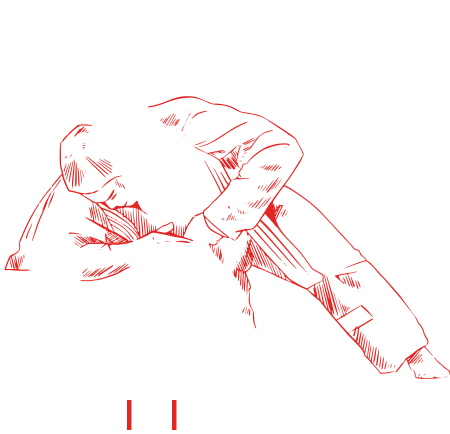
The Reverse Crucifix is a highly advanced Brazilian Jiu-Jitsu technique that requires exceptional control and leverage. This technique involves trapping your opponent's arm while maintaining control over their back, ultimately leading to a submission. To further enhance your understanding and mastery of this technique, there are several videos available that provide detailed demonstrations and explanations. One such video is by a renowned BJJ practitioner who breaks down the Reverse Crucifix step by step, highlighting the key points of control and positioning. Another video features a high-level BJJ competitor showcasing his own variations and strategies when executing the Reverse Crucifix in live sparring situations. Additionally, there is a comprehensive tutorial video that covers various entries to the Reverse Crucifix from different positions, allowing practitioners to develop a well-rounded game plan. These videos not only offer visual guidance but also valuable insights and tips from experienced practitioners, ensuring that you can effectively apply the Reverse Crucifix technique in your own training and competition scenarios. Whether you are a beginner looking to learn the basics or an advanced practitioner seeking to refine your skills, these videos provide an invaluable resource for understanding and implementing this complex BJJ technique. By studying the demonstrations, analyzing the intricacies of each movement, and practicing the technique diligently, you can gradually incorporate the Reverse Crucifix into your arsenal of submissions, adding a powerful tool to your repertoire. Remember, mastering any BJJ technique requires patience, dedication, and a willingness to continuously learn and adapt. So, make use of these informative videos to deepen your understanding of the Reverse Crucifix and take your BJJ game to new heights.
1. What is the reverse crucifix technique in Brazilian Jiu-Jitsu?
The reverse crucifix is a BJJ technique where the attacker traps both of the opponent's arms behind their back while maintaining control from a top position. This immobilizes the opponent and allows the attacker to apply various submissions or strikes.
2. How is the reverse crucifix different from the regular crucifix?
In a regular crucifix, the attacker traps one of the opponent's arms using their legs and secures control from a top position. In a reverse crucifix, however, the attacker traps both of the opponent's arms, making it even more challenging for the opponent to escape or defend themselves.
3. What are some effective submissions from the reverse crucifix position?
From the reverse crucifix, practitioners can apply various submissions such as arm locks, shoulder locks, neck cranks, or even transitions to other dominant positions. Popular submissions include the Kimura lock, Americana lock, or even a modified rear-naked choke.
A team of BJJ enthusiasts, curating videos for the benefits of others.