Submission Searcher
Recommended
THE HALF GUARD ANTHOLOGY
From LACHLAN GILES
- Both
- Mixed
- Systems

[category_total_hours]
Progress in Positional Grappling: 0%
Sign up free to track your progress!
Video Techniques
Rubber Guard Retention and Recovery Technique Videos
Welcome to the Rubber Guard Retention and Recovery Technique category! Here, you will find a curated collection of videos that will help you master the art of maintaining and regaining control from the rubber guard position in Brazilian Jiu-Jitsu (BJJ). Whether you are a beginner looking to improve your guard game or an advanced practitioner seeking to refine your skills, these instructional videos will provide you with valuable insights and strategies. With the help of our expert instructors, you will learn various techniques and drills to enhance your rubber guard retention and recovery abilities. So, get ready to expand your knowledge and take your BJJ game to the next level!
Curated instructionals for this category
Some links may be affiliate links. We may earn a commission if you purchase through them, at no extra cost to you.
Compare curated courses for this category
From LACHLAN GILES AND ARIEL TABAK
Learn a complete retention framework covering around-and-under, through-the-legs, close-range situations, and getting back on offence.
From BERNARDO FARIA
Build a broad base across core positions, escapes, sweeps, and simple attacks without needing a narrow game plan first.
From JOHN DANAHER
Learn a systematic survival and escape framework from common pins and bad positions so you can stay alive long enough…
Some links may be affiliate links. We may earn a commission if you purchase through them, at no extra cost to you.

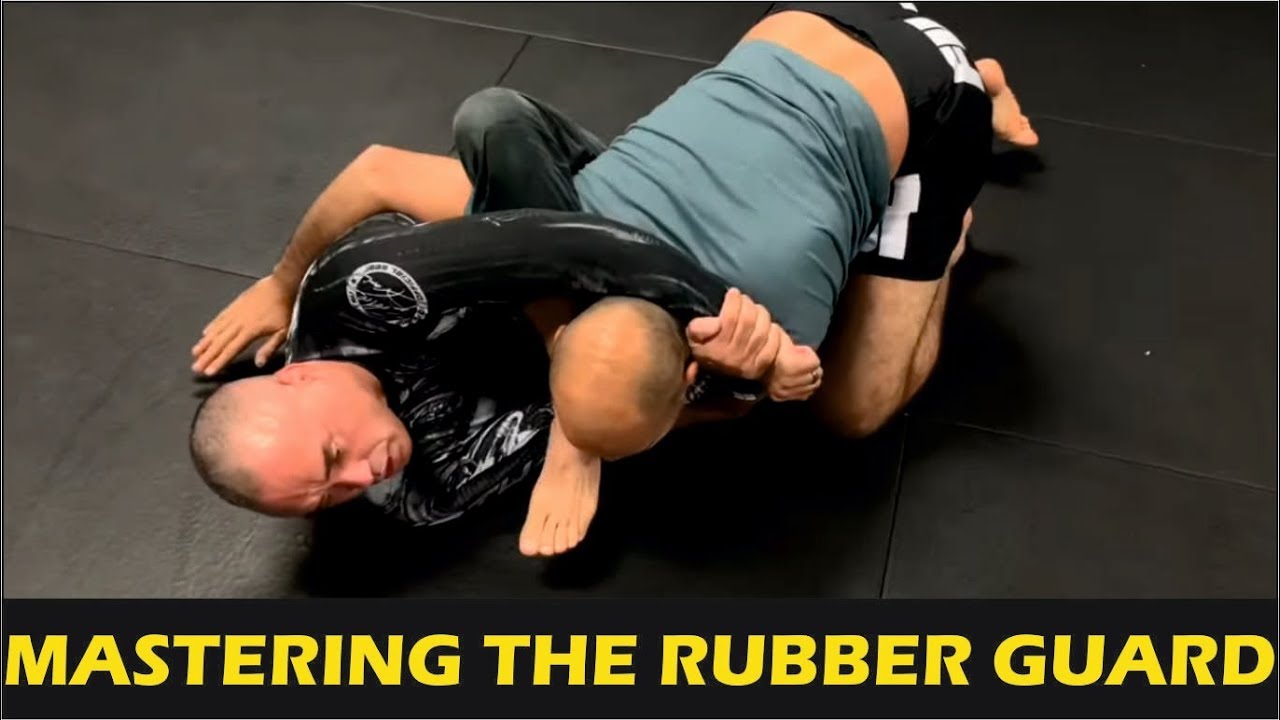
Rubber Guard retention and recovery techniques are essential for any Brazilian Jiu-Jitsu practitioner aiming to improve their guard game. The Rubber Guard is a highly effective position that allows the practitioner to control and attack their opponent from the bottom. However, maintaining this position can be challenging as opponents often try to pass the guard and escape. In order to master the Rubber Guard, it is crucial to understand the various techniques and strategies for retaining and recovering the position. Luckily, there are numerous informative and instructional videos available that provide step-by-step guidance on how to execute these techniques effectively.
One highly recommended video for learning Rubber Guard retention and recovery techniques is "Rubber Guard: The Meathook" by Eddie Bravo. Eddie Bravo, the creator of the Rubber Guard system, provides a detailed breakdown of the Meathook technique in this video. The Meathook is a fundamental technique that allows the practitioner to control their opponent's posture and prevent them from passing the guard. Bravo explains the mechanics of the Meathook, highlighting the importance of proper hand placement and hip movement. He also discusses common mistakes to avoid and offers tips for troubleshooting if the technique is not working effectively.
Another valuable resource for mastering Rubber Guard retention and recovery techniques is the video series "Rubber Guard: The Mission Control Series" by Shawn Williams. In this series, Williams breaks down the Mission Control position, which is a crucial component of the Rubber Guard system. He demonstrates various techniques for maintaining Mission Control and offers strategies for recovering the guard if it is compromised. Williams emphasizes the importance of hip movement, leverage, and maintaining constant pressure to keep the opponent trapped and unable to pass the guard.
Furthermore, the video "Rubber Guard: The Lockdown" by Dean Lister is highly recommended for practitioners looking to enhance their Rubber Guard retention and recovery skills. Lister, a renowned Brazilian Jiu-Jitsu black belt, focuses on the Lockdown technique, which is a powerful tool for controlling and sweeping opponents from the bottom. He explains the mechanics of the Lockdown, showcasing different variations and transitions that can be utilized to maintain and recover the Rubber Guard position effectively. Lister's detailed explanations and demonstrations make this video an invaluable resource for anyone seeking to improve their Rubber Guard game.
In conclusion, mastering Rubber Guard retention and recovery techniques can greatly enhance a practitioner's guard game in Brazilian Jiu-Jitsu. With the help of instructional videos such as "Rubber Guard: The Meathook," "Rubber Guard: The Mission Control Series," and "Rubber Guard: The Lockdown," practitioners can gain a comprehensive understanding of the techniques and strategies necessary for maintaining and recovering the Rubber Guard position. By studying these videos and practicing the techniques diligently, practitioners can elevate their guard game to new heights and become formidable opponents on the mat.
1. What is the rubber guard retention and recovery technique in Brazilian Jiu-Jitsu (BJJ)?
- The rubber guard retention and recovery technique is a defensive technique used in BJJ to maintain control over an opponent while being in the guard position. It involves using the legs to control the opponent's posture and prevent them from passing the guard, while also providing options for submission or sweep opportunities.
2. How can watching rubber guard retention and recovery technique videos help improve my BJJ skills?
- Watching rubber guard retention and recovery technique videos can provide visual demonstrations and explanations of the technique, allowing you to understand and learn the proper execution of the moves. It can also help you analyze different variations and transitions, enhancing your overall knowledge and proficiency in the technique.
3. Where can I find rubber guard retention and recovery technique videos?
- Rubber guard retention and recovery technique videos can be found on various online platforms such as YouTube, BJJ instructional websites, or through specialized BJJ training programs. Many renowned BJJ practitioners and instructors offer instructional videos that specifically focus on this technique, providing valuable insights and guidance for practitioners of all levels.

A team of BJJ enthusiasts, curating videos for the benefits of others.